Agentic Bot
Say it. The robot goes and does it.
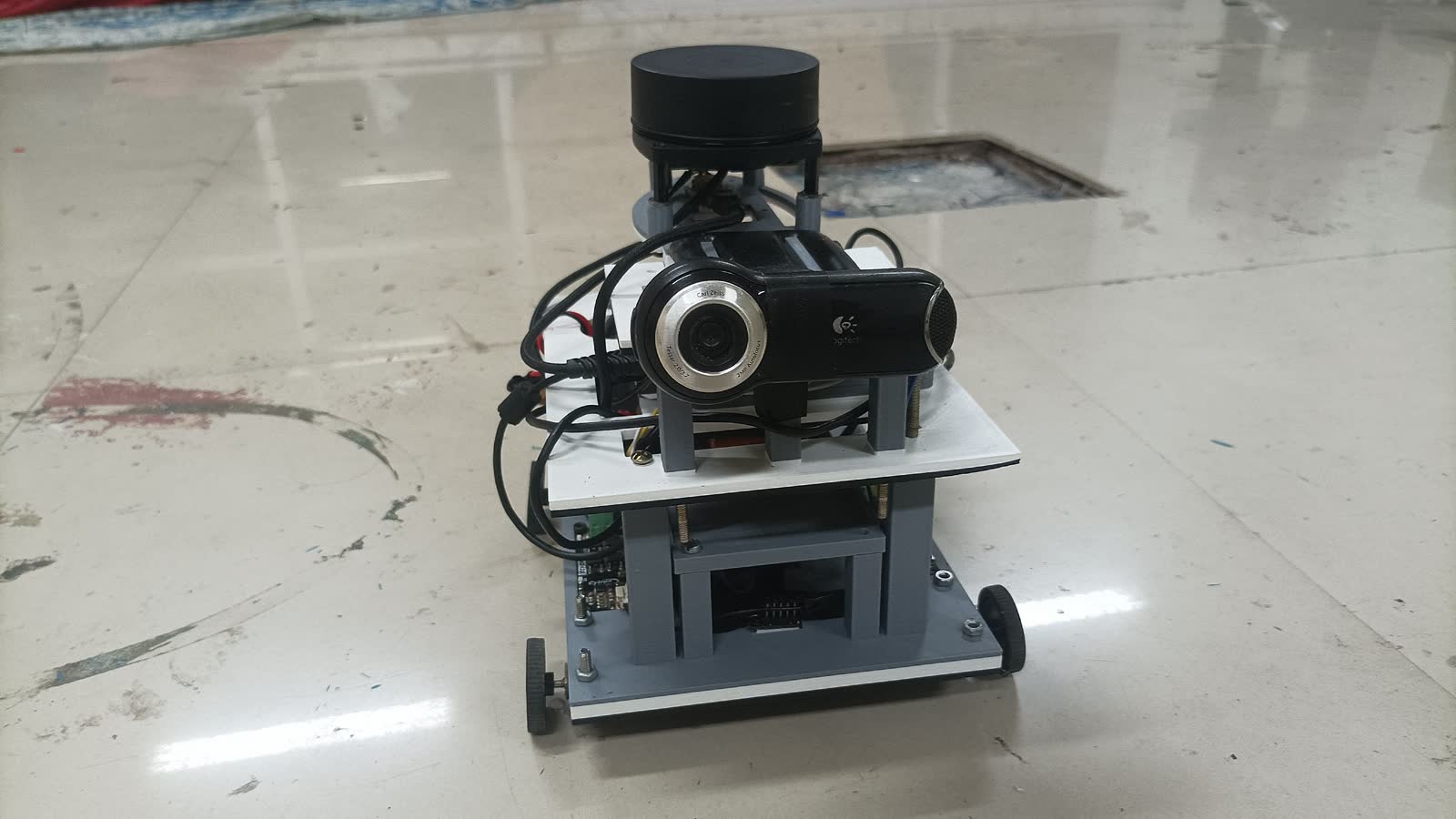
An embodied agent that plans with an LLM, sees with a VLM, and moves with ROS 2 — over a semantic map built from fused LiDAR and camera.
What it does
LLM task planner sitting over a VLM scene-understanding layer
LiDAR–camera calibration and fusion into a semantic map
LiDAR-inertial odometry and SLAM for localisation
ROS 2 navigation with dynamic replanning around moving obstacles
Jetson Orin Nano edge deployment with Gazebo simulation parity
On camera
Watch the film
R2-D2 Redux — from the parts to a spoken goal · 1:47, with sound.
The long version
Most robots take coordinates. This one takes sentences. A language model decomposes an instruction into steps, a vision-language model checks those steps against what the robot can actually see, and a ROS 2 navigation stack turns the surviving goals into motion.
The piece that makes it work is the map. LiDAR and camera are calibrated and fused into a semantic map rather than a plain occupancy grid — the robot knows not just that a region is occupied but what occupies it. That is what makes an instruction referring to a place by name resolvable at all.
The stack runs on a Jetson Orin Nano at the edge, offloading heavier reasoning only when a network is available, and stays reproducible in Gazebo so a change can be proven in simulation before it touches hardware.